
How Small MSPs Can Build Profitable Vulnerability Management Written on . Posted in How-To.

Cyber insurers and auditors expect regular vulnerability scans. The days of running a scanner once a year and tossing a 300-page PDF of Common Vulnerabilities and Exposures (CVEs) at your clients are over. Small Managed Service Providers (MSPs) face a problem: you need to offer vulnerability scanning, but the tools on the market are built for massive enterprise teams. They lack multi-tenancy, charge unpredictable licensing fees, and flood your technicians with noise.
Instead of generating endless spreadsheets, successful MSPs are shifting from basic scanning to Vulnerability Management as a Service (VMaaS) or Continuous Threat Exposure Management (CTEM). Here is how your MSP can turn a painful requirement into a high-margin service line.
The Problem with Legacy Scanners
Most traditional scanners fail in a managed services environment.
- Poor Multi-Tenancy: If you have to log into 20 different portals to manage 20 clients, you lose hours of engineering time every week.
- Alert Fatigue: A raw scan might find 500 "critical" issues, but 490 of them are behind a firewall and impossible to exploit from the outside. Legacy tools prioritize based on base CVSS scores rather than actual risk and exposure.
- Rigid Pricing: Enterprise scanners often require huge upfront commitments or price per IP address in ways that make it impossible to maintain your profit margins on smaller accounts.
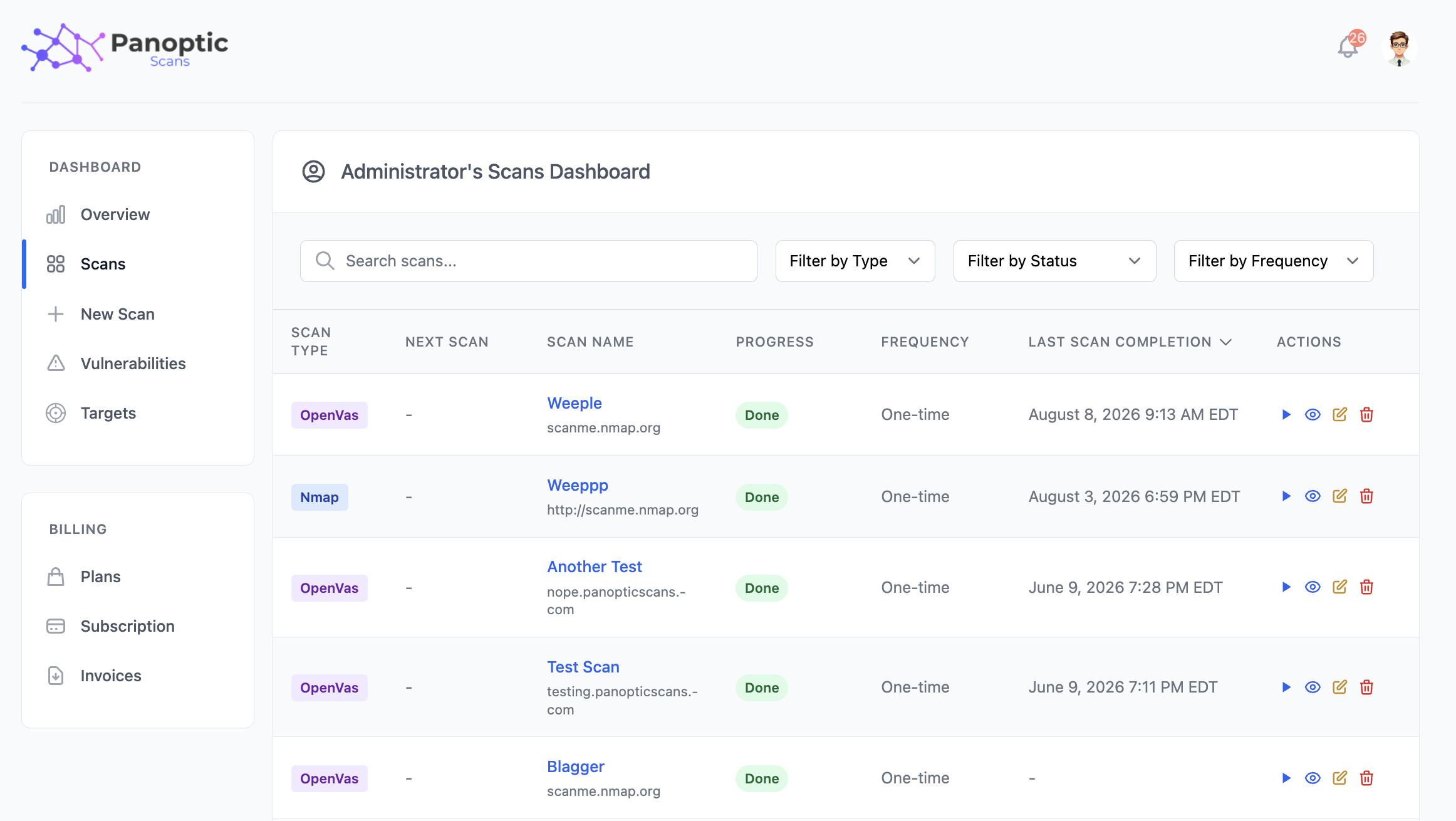
Building a Workable VMaaS Practice
Your clients do not care about CVSS scores. They want to know what to fix this week and they need reports they can hand to their cyber insurance broker. To build a solid VMaaS practice, focus on three areas.
1. Risk-Based Prioritization
Instead of treating every vulnerability equally, filter the noise. Look at the Exploit Prediction Scoring System (EPSS) and focus on external-facing assets first. Fix the issues that attackers are actively exploiting in the wild.
2. Automated, Client-Ready Reporting
You need to prove to your clients that you are closing the loop. Generate monthly executive summaries showing the trend of open versus closed vulnerabilities. White-label these reports to reinforce your brand value.
3. Integrated Remediation
Finding a hole is useless if you cannot patch it. Tie your scanning results directly to your patching cycles and track the Service Level Agreements (SLAs) for remediation.
How Panoptic Scans Supports Small MSPs
We built Panoptic Scans to solve these exact headaches for service providers.
| Feature | Why It Matters for MSPs |
|---|---|
| True Multi-Tenancy | Manage all your clients from a single pane of glass without logging in and out. |
| White-Labeled Reporting | Generate clean, automated reports with your logo that insurers and auditors will accept. |
| Clear Prioritization | We filter out the noise so your technicians only spend time on the vulnerabilities that actually matter. |
| Predictable Pricing | Pay for what you use, making it easy to build a profitable monthly recurring revenue (MRR) service tier. |
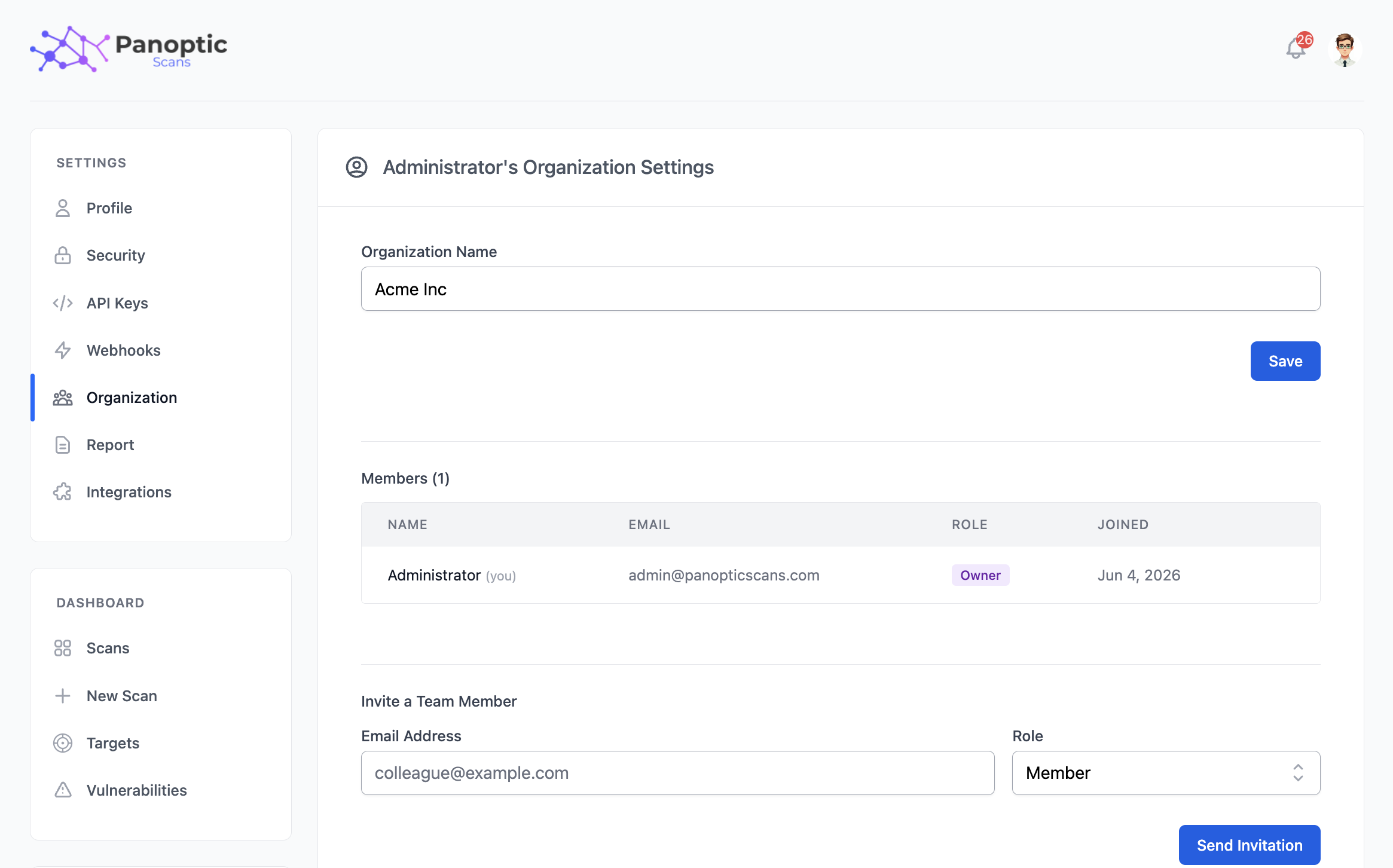
If you have clients asking about SOC 2 requirements or cyber insurance renewals, you need a process that scales. Read our guide on SOC 2 Vulnerability Scanning Requirements to understand what auditors look for, or check out how we handle Hosted Nuclei Scans.
Vulnerability management shouldn't drain your resources. With the right platform, you can protect your clients and grow your business without burning out your engineers.