
API Vulnerability Scanning for Indie SaaS: Why Your Public Endpoints Need Continuous Coverage Written on . Posted in Informational.
Your indie SaaS product almost certainly ships a public API. Whether it is a REST surface for your mobile app, webhooks for integrations, or a GraphQL layer for partners, those endpoints are not an afterthought - they are often the primary attack surface. Attackers know this. They probe for undocumented routes, replay tokens, and test every ID parameter for broken object-level authorization long before they bother with your marketing site.
A one-time web scan of your homepage will not catch that. Continuous API vulnerability scanning will. In this guide we cover why public endpoints need ongoing coverage, what breakages indie teams miss, and a practical scanning routine you can run without a full security team.
Why Public API Endpoints Are a Different Risk
Traditional perimeter scanning looks at open ports, TLS configuration, and known CVEs on internet-facing hosts. That still matters. API risk is different because the vulnerability often lives in application logic rather than a missing OS patch.
- Authentication gaps: Misconfigured JWT validation, missing rate limits on login or token refresh, and forgotten debug routes that skip auth entirely.
- Broken object-level authorization (BOLA/IDOR): Changing a customer ID in a path or query returns another tenant's data. This is consistently one of the top OWASP API risks.
- Excessive data exposure: Endpoints that return full objects when the client only needs a few fields, leaking PII or secrets in responses.
- Shadow and zombie APIs: Old v1 routes, staging gateways, and partner-only paths that never made it into your inventory or your scanner's target list.
- Business logic abuse: Coupon stacking, privilege escalation through role fields, and webhook forgery that static CVE scanners will never flag.
If your scanning program only covers the HTML front end, you are testing the brochure while leaving the warehouse unlocked.
What One-Off Scans Miss on APIs
Annual or pre-audit scans create a false sense of safety. APIs change every sprint. A new feature endpoint, a temporary feature flag route, or a hastily exposed admin GraphQL mutation can land in production between scan windows.
One-off scans also tend to be unauthenticated. They see your OpenAPI docs page and a few public health checks. They do not exercise authenticated business routes where most of your sensitive data lives. For coverage behind login, pair API testing with authenticated web application vulnerability scans so the spider and active checks run with a real session.
Continuous Coverage That Fits Indie SaaS
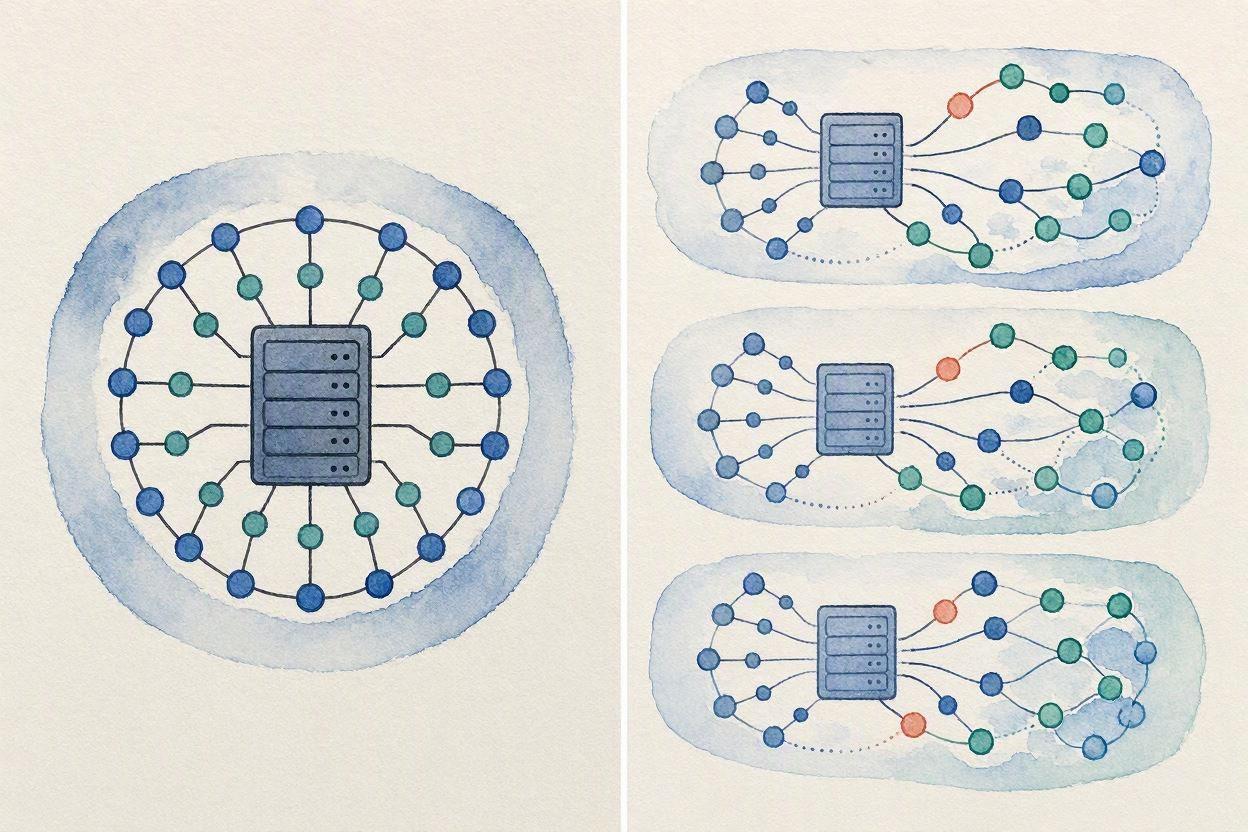
You do not need an enterprise AppSec program. You need a repeatable loop that matches how you ship:
- Inventory public and authenticated API entry points. Start from your OpenAPI/Swagger spec, API gateway routes, and reverse-proxy configs. Include staging if it is reachable from the internet.
- Scan the external perimeter and the application layer. Combine network/port coverage with application DAST against your API base URLs. Hosted ZAP web application scanning is a practical way to run recurring DAST without self-hosting the scanner.
- Add authenticated coverage for protected routes. Use a dedicated test account and an auth script so scanners can reach tenant-scoped endpoints. Authenticated scanning is available on Basic plans and above.
- Schedule weekly or post-deploy runs. Trigger on release tags or merge to main when you can. At minimum, keep a weekly cadence so new endpoints are not invisible for months.
- Prioritize findings that affect tenancy and auth. Treat BOLA, auth bypass, and injection on write endpoints as P1. Defer noisy low-severity header findings until the high-risk list is clear.
This loop also supports SOC 2 evidence. Auditors and enterprise buyers increasingly ask how you identify vulnerabilities in applications and APIs over time, not just once a year. See our guide on vulnerability scanning for SOC 2 compliance and the Vanta vulnerability scanning integration if you collect evidence automatically.
A Practical API Scanning Checklist
- [ ] All public API base URLs and versions listed in a living inventory (not only in someone's head).
- [ ] Unauthenticated DAST run against documentation, health, and public read endpoints.
- [ ] Authenticated DAST run against tenant-scoped CRUD routes with a non-production test user.
- [ ] Rate limiting and auth failure responses verified on login, token, and password-reset style endpoints.
- [ ] Object ID parameters fuzzed for cross-tenant access on at least your highest-value resources.
- [ ] Staging and forgotten subdomains checked so shadow APIs are not left outside the scan scope.
- [ ] Recurring schedule in place (weekly or on deploy) with someone owning triage.
MSPs running this for multiple SaaS clients can standardize the same checklist across tenants. More on that model is in vulnerability scanning for MSPs.
How Network and Application Scans Work Together
API scanning is not a replacement for network vulnerability scanning - it is the application layer complement. Network scanners catch exposed databases, outdated services, and misopened ports. Application scanners catch logic and injection flaws on HTTP APIs. Indie teams that only pick one leave a blind spot. If your architecture also depends on private VPCs and internal services, pair this with internal network vulnerability scanning so lateral paths are not ignored.
Conclusion
Public API endpoints are where indie SaaS products do business - and where attackers look first. Continuous API vulnerability scanning closes the gap that annual website scans leave open: auth flaws, BOLA, shadow routes, and regressions introduced every release.
Start with an inventory, schedule authenticated and unauthenticated application scans against your API bases, and triage tenancy and auth issues first. Ready to put recurring coverage in place? Compare options on our pricing page or start with hosted application scanning via ZAP.